
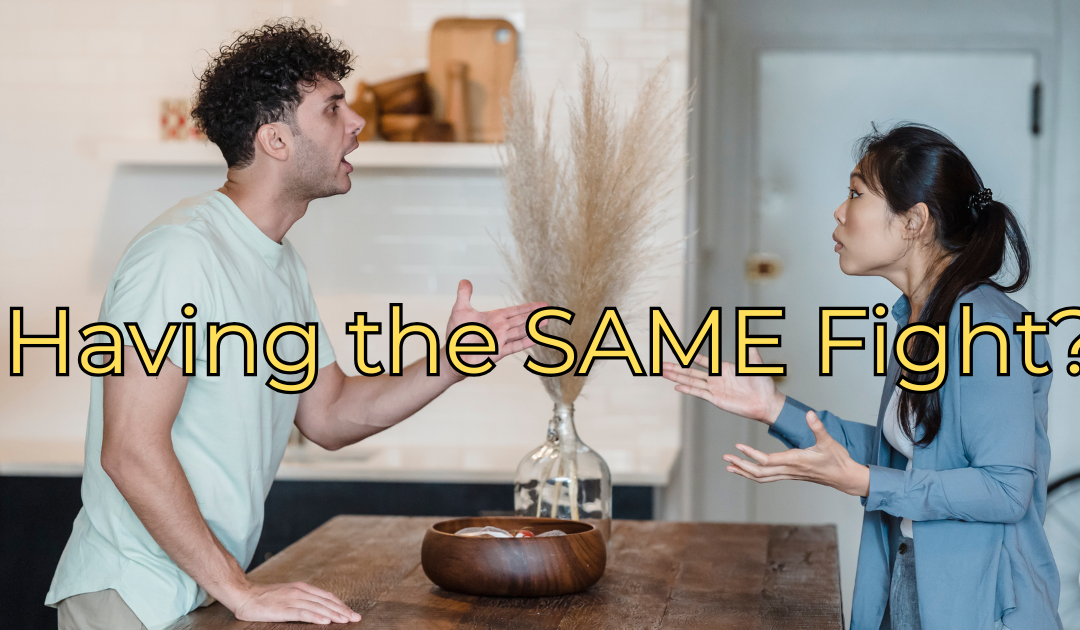
“Finding patterns is the essence of wisdom.” Dennis Prager
He’s standing in the kitchen again.
His wife is frustrated. He’s defensive. Neither of them can even remember how the conversation started anymore. Something about schedules. Or tone. Or the fact that he forgot to put his dirty glass in the dishwasher like she asked.
Again.
At some point, he mentally leaves the room.
Not physically. Emotionally.
He nods. Says a few words. Maybe apologizes just enough to end the conversation faster. But internally he’s done. The quiet door closes, and now he’s just waiting for it to be over.
Most husbands know exactly what this feels like.
What many don’t understand is this:
The marriage usually isn’t dying from the argument itself.
It’s dying from what both people have started believing about each other inside the argument.
The surface issue is almost never the real issue.
The dishes are not the issue.
The schedule is not the issue.
The sex is not the issue.
The phone is not the issue.
Those are simply the delivery systems for deeper emotional fears and unmet expectations.
Underneath most recurring conflict is a much more vulnerable question:
“Am I important to you?”
That’s the real fight.
But most couples never get there because they stay trapped reacting to behaviors instead of understanding meaning.
She experiences his withdrawal as indifference.
He experiences her criticism as proof he can never get it right.
So she pushes harder for connection.
He retreats harder for protection.
Round and round they go.
Different argument. Same emotional outcome.
Many Men Stay Too Long Inside Broken Patterns
Not necessarily broken marriages.
Broken patterns.
And there’s a difference.
Most people stay too long in dynamics that are clearly hurting them because they become emotionally attached to fixing them.
And the moment you feel like you need something emotionally, you lose clarity.
You begin over-explaining.
Defending yourself constantly.
Walking on eggshells.
Tolerating communication patterns that slowly erode connection and self-respect.
Not because you’re weak.
Because you’re scared of losing the relationship.
But ironically, this desperation often creates the very disconnection both people fear.
Most husbands are not emotionally shutting down because they don’t care.
They’re shutting down because somewhere along the way they stopped believing engagement was safe.
After enough repeated conflict, the body starts treating certain conversations like danger.
So men adapt.
They get quieter.
More guarded.
More careful.
Less emotionally available.
Not because they want distance.
Because they no longer know how to stay connected without feeling attacked, inadequate, or overwhelmed.
But here’s the problem:
Withdrawal creates panic in the partner who already feels disconnected.
So she pursues harder.
Questions more.
Pushes more.
Criticizes more intensely.
Which confirms his belief that emotional engagement only creates pain.
And unless someone recognizes the pattern itself as the problem, couples spend years blaming each other instead of addressing the loop.
Healthy Relationships Require the Ability to “Walk Away”
Not walk away from the marriage, but from the pattern.
That’s the distinction most people miss.
Emotionally healthy people develop the ability to stop participating in destructive dynamics.
They stop trying to win impossible conversations.
They stop chasing validation through defensiveness.
They stop forcing resolution while emotionally flooded.
They stop treating every disagreement like a referendum on the entire relationship.
That willingness changes everything.
Because the person who can step out of the cycle regains clarity.
And clarity restores emotional leadership.
There are moments in marriage where continuing the conversation actively damages connection.
Not because the issue doesn’t matter.
Because neither person is emotionally regulated enough to solve it well.
Hero husbands learn the difference between avoidance and intentional disengagement.
One abandons the relationship. The other protects it.
One says:
“I’m done talking.”
The other says:
“I care too much about us to keep having this conversation like this.”
That’s emotional maturity.
One of the most important things I teach my clients is that anger is usually the surface emotion, not the core emotion.
Underneath anger is often:
- Hurt
- Fear
- Loneliness
- Rejection
- Shame
- Feeling unseen
- Feeling unimportant
And beneath almost all of it is an unmet expectation.
When those expectations go unspoken, they become resentment.
And resentment turns ordinary conversations into emotionally loaded battlegrounds.
A lot of people assume marriage is supposed to feel chronically hard.
It’s not.
Marriage requires effort.
But there’s a difference between effort and friction.
Effort creates connection.
Friction destroys safety.
The healthiest marriages are not conflict-free.
They’re the ones where both people learn:
- how to emotionally regulate,
- how to communicate about what’s underneath the anger,
- how to stop making each other the enemy,
- how to leave destructive patterns behind before resentment builds.
Because real strength in marriage is about refusing to continue patterns that slowly destroy connection.
And sometimes the most powerful moment in a marriage happens when one person finally stops asking:
“How do I win this fight?”
And starts asking:
“How do I stop feeding the cycle?”
You’ve got this. But if you don’t, I’ve got you. If you see yourself in this pattern and are ready to change it, hit reply with the word CYCLE to find out how.
Responsibility, Not Blame for Your Marriage
"The single most empowering thing you can do is take responsibility for yourself, 100% of the time." Mel Robbins If you’ve ever had an argument with your wife and found yourself mentally building a case for why you were right, you’re not alone. You remember what she...

You’ve Changed But Your Wife Doesn’t Trust It
"Stop being afraid of what could go wrong, and start being excited about what could go right." Tony Robbins There’s a statistic every married man should know: Women initiate roughly 67% to 90% of divorces, depending on the study and the population being measured. The...

Own Your Part Without Taking All the Blame
"I will keep constant watch over myself and‚ most usefully‚ will put each day up for review." Seneca When things go wrong in your marriage, it’s easy to start building a case. You remember what she said. You remember what you said. You can probably point to the moment...