
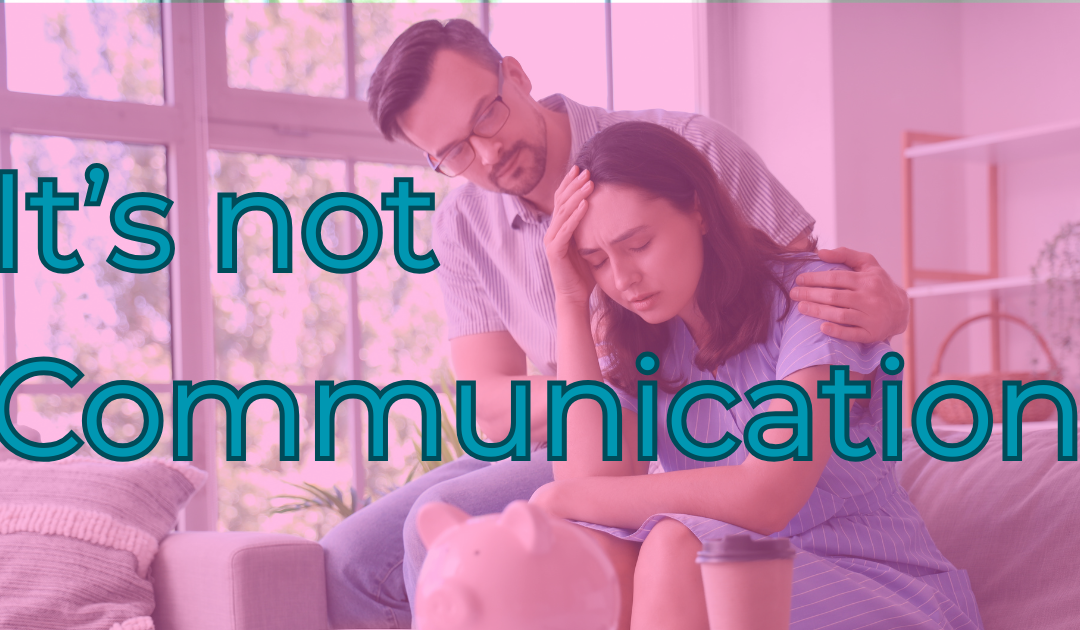
“All things are difficult before they are easy.” Thomas Fuller
If you’re a successful professional, chances are you’re no stranger to difficult conversations.
You negotiate contracts.
Deliver performance reviews.
Handle unhappy clients.
Lead meetings where millions of dollars—or at least your reputation—are on the line.
You don’t avoid hard conversations.
So why is it that one conversation with your wife can feel more intimidating than presenting to the executive team?
Because it isn’t the conversation you’re avoiding.
It’s the discomfort you expect to feel during it.
Research shows that 70% of difficult conversations are avoided.
Seventy percent.
Most of the conversations that could strengthen marriages, resolve resentment, deepen intimacy, or prevent years of misunderstanding never happen.
Not because couples don’t love each other or because they no longer care.
It’s really not because they don’t know what to say.
It’s because the emotional cost of starting the conversation feels too high.
Think about the last difficult conversation you finally had.
Maybe it was about finances. Or sex. Or feeling disconnected.
How long did you think about having that conversation before you actually had it?
Hours? Days? Weeks?
You may have rehearsed it dozens of times.
You imagined every possible response.
You built arguments in your head.
Prepared rebuttals.
Wondered if it would start a fight.
Then eventually…you had the conversation.
If it went well, what was the very first emotion you felt afterward?
Relief.
Not because everything was solved.
Simply because it was over.
That’s worth paying attention to.
The buildup often costs you far more emotional energy than the conversation itself.
Most husbands assume the problem is communication.
“If I just knew the right words…”
“If I explained myself better…”
“If I had a better script…”
So they read another book.
Watch another video.
Search for a better script.
Unfortunately, those things by themselves won’t change things.
Because after more than twenty years as a marriage therapist, I’ve noticed something.
Most husbands I work with already know what good communication looks like.
They know they should use “I” statements.
They know they should listen.
They know they shouldn’t become defensive.
They know they should stay calm.
Ask questions.
Show empathy.
If I asked them these things in my office, they’d answer every question correctly.
But then they go home.
The conversation starts.
Their wife says something they weren’t expecting.
She expresses disappointment.
She gets emotional.
Or she says those dreaded five words, “Honey, we need to talk.”
Suddenly, everything they know disappears.
Not because they forgot it. Because they couldn’t access it.
This is the distinction that changed how I think about communication.
Most marriage advice assumes you have a skill problem.
But I believe you have a capacity problem.
A capacity to stay present when you’re uncomfortable.
A capacity to hear criticism without immediately defending yourself.
A capacity to tolerate uncertainty instead of rushing to fix it.
A capacity to stay emotionally engaged when every instinct tells you to withdraw.
Those are very different skills.
Think about it this way.
A professional golfer doesn’t forget how to swing a club because he’s playing in the final round of a major tournament.
The mechanics haven’t disappeared.
Pressure simply makes them harder to access.
Marriage works the same way.
The communication skills are often already there.
The challenge is accessing them when emotions are high.
And that’s why so many conversations go sideways—into arguments, silence, defensiveness.
When your nervous system senses emotional danger, it shifts into protection mode.
You stop listening.
You start defending. Or explaining. Or fixing. Or shutting down.
Not because you’re trying to be difficult.
It’s because your brain has temporarily decided that protecting you is more important than connecting with your wife.
No communication script can overcome that.
At least not consistently.
Most husbands prepare for a difficult conversation by asking,
“What should I say?”
I think there’s a better question.
“Can I stay present even if this conversation becomes uncomfortable?”
Because confidence in marriage doesn’t come from having perfect words.
It comes from trusting yourself to remain calm, curious, and connected when the conversation doesn’t go according to plan.
Ironically, that’s when the communication techniques finally start working.
Not because you’ve learned something new.
But because you’ve become capable of using what you’ve known all along.
In the next article, I’ll explain why your brain hijacks conversations—and what you can do to keep your best self in the driver’s seat when it matters most.
You’ve got this. But if you don’t, I’ve got you. If you’re ready to stop avoiding hard conversations in your marriage, contact me with the word CAPACITY.
Responsibility, Not Blame for Your Marriage
"The single most empowering thing you can do is take responsibility for yourself, 100% of the time." Mel Robbins If you’ve ever had an argument with your wife and found yourself mentally building a case for why you were right, you’re not alone. You remember what she...

You’ve Changed But Your Wife Doesn’t Trust It
"Stop being afraid of what could go wrong, and start being excited about what could go right." Tony Robbins There’s a statistic every married man should know: Women initiate roughly 67% to 90% of divorces, depending on the study and the population being measured. The...

Own Your Part Without Taking All the Blame
"I will keep constant watch over myself and‚ most usefully‚ will put each day up for review." Seneca When things go wrong in your marriage, it’s easy to start building a case. You remember what she said. You remember what you said. You can probably point to the moment...